
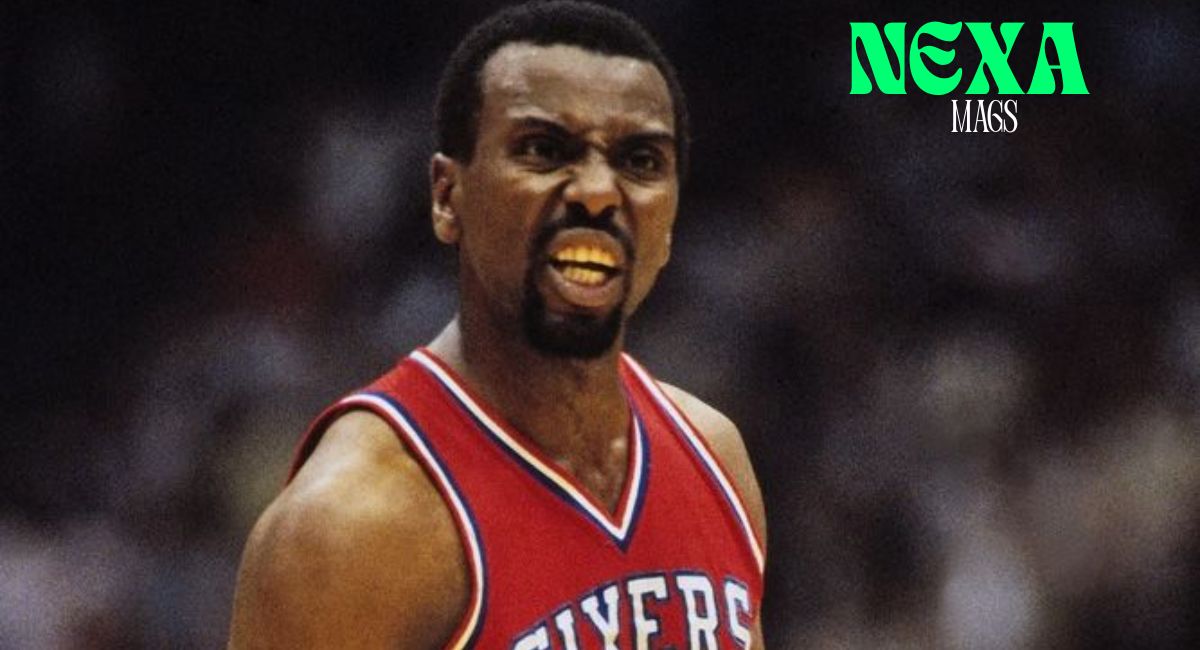
There is a particular kind of player that opponents dreads more then any flashy dunker or trash-talking showman. That player is the silent assassin, the guy who stares you down, receives the inbound pass with the game on the line, and simply buries you. Andrew Toney was that player. Quiet, composed, lethal, and criminally underappreciated, he spent eight seasons with the Philadelphia 76ers and left a legacy that, even today, basketball historians continues to argue belongs in a far more prominent conversation.
We believe the full story of Andrew Toney deserves to be told properly, not as a footnote beside Julius Erving or Moses Malone, but as a chapter of its own.
Andrew Toney’s Early Life and Rise Through College Basketball
Born on November 23, 1957, in Birmingham, Alabama, Toney grew up in an era when Southern basketball talent was deep but often overlooked by the national spotlight. He developed his game with a fierceness that came not from privilege but from competition, from the necessity of proving himself every single time he stepped onto a court.
His college career at the University of Louisiana at Lafayette between 1976 and 1980 was where the foundation of his NBA identity was poured. He averaged strong numbers for his program, and more importantly, he developed the patience of a scorer who understand that greatness is not always about the first quarter. It is about the fourth. Coaches who watched him during those years consistently noted that he performed best when the pressure was highest, a trait that does not get taught in any coaching manual.
His selection in the 1980 NBA Draft by the Philadelphia 76ers, 8th overall in the first round, was a pick that would go on to shape the identity of one of the most exciting franchises of the decade.
The Philadelphia 76ers Era and Toney’s Immediate NBA Impact
Stepping into a locker room that already contained the Doctor himself, Julius Erving, and later Moses Malone, a lesser player might have accepted a supporting role without question. Andrew Toney did not think that way. He earned his reputation through relentless consistency and an attitude that refuse to accept being invisible.
During his early seasons with Philadelphia, Toney carved out a role as one of the league’s most reliable scoring guards. He could create his own shot with either hand, he had the footwork of a player who studied the game deeply, and his mid-range pull-up jumper was the kind of weapon that defenders lose sleep over. There were nights where the Sixers needed someone to simply take over, and Toney was the man they handed the ball to.
The career statistics for Andrew Toney over eight NBA seasons tells the story clearly: 7,458 total points, a career scoring average of 15.9 points per game, two NBA All-Star selections, and one NBA Championship ring. For a player in an era defined by physical defense and slower pace, those numbers reflects genuine excellence.
“The Boston Strangler”: How a Nickname Defined a Legacy
If you want to understand just how feared Andrew Toney was, you need to look no further then the nickname that followed him for the rest of his career and beyond. “The Boston Strangler” was not handed out by a friend or invented by a publicist. It was earned through repeated, ruthless performances against one of the most celebrated franchises in the history of professional basketball.
The Boston Celtics of the early 1980s were loaded. Larry Bird, Robert Parish, Kevin McHale, Dennis Johnson, these were not just good players, they was the measuring stick by which all other teams in the Eastern Conference was judged. Every playoff series against Boston was a war, and Andrew Toney showed up to fight harder and better then almost anyone expected.
He tormented Celtics defenders, hitting shot after shot in hostile environments, and doing it without a word, without a celebration, with nothing but a calm walk back down the court. The NBA’s historical records on great playoff performers will show you numbers, but the numbers do not capture the particular dread that Celtics fans felt when the ball found Toney’s hands in a close game.
Larry Bird himself, a man who was not known for freely handing out compliments to opponents, acknowledged that Toney was one of the most difficult guards he ever competed against. That acknowledgement alone should place Andrew Toney in a different category of recognition then he typically receives.
What Made Andrew Toney Genuinely Impossible to Guard
To fully appreciate what made Andrew Toney so dangerous, we have to talk about his game from a technical standpoint. Most feared players have one or two weapons that defenders can at least prepare for. Toney presented a different kind of problem.
His first step was explosively quick for a guard of his size, standing at approximately 6 feet 3 inches tall with a strong, physical build that allowed him to initiate contact rather than absorb it. He did not shy away from physicality. He invites it. When defenders tried to crowd his space, he used his body to create separation. When they gave him room, he pull up and hit contested jumpers with a release so smooth that it barely look like effort.
Beyond athleticism, Toney possessed exceptional basketball intelligence. He studied opponents, recognized defensive tendencies, and exploited moments of hesitation with surgical precision. His ability to read a pick-and-roll, then decide in a split second whether to attack the basket, kick out to an open teammate, or rise up for a mid-range shot, made him virtually unguardable in half-court situations.
His composure was perhaps the most unsettling quality of all. The emotional dynamics of NBA playoff basketball tends to crack even seasoned veterans, yet Toney seemed completely immune to crowd noise, defensive pressure, and high-stakes moments. He played the same way in Game 7 as he played in the regular season. That consistency of temperament was, and still is, extraordinarily rare.
The 1983 NBA Championship: Andrew Toney’s Greatest Moment
The 1982-83 Philadelphia 76ers season remains one of the most dominant championship runs in NBA history. Moses Malone’s famous “fo, fo, fo” prediction (four sweeps through the playoffs) captured the national imagination, but within that team, Toney was the secondary engine that kept everything moving.
His role on that squad was crucial precisely because he was trusted. In a team full of alpha personalities and talented veterans, trust is a currency that is harder to earn then many realize. Head coach Billy Cunningham knew he could deploy Toney in clutch moments without hesitation, and that confidence was validated repeatedly throughout that championship run.
Winning the title that year was not just a professional achievement for Toney. It was validation. It confirmed what those who watched him closely already knew: that he was not simply a talented piece in a larger puzzle, but a genuine reason why the puzzle came together at all.
Andrew Toney’s Injuries and the Heartbreak of Unfulfilled Potential
No honest account of Andrew Toney’s career can avoid the painful subject of his injuries. Beginning in the mid-1980s, persistent stress fractures in his feet begin to rob him of the very weapons that made him so dangerous. His quickness diminished, his ability to explode off the dribble faded, and no matter how hard he worked in rehabilitation, his body refused to cooperate fully.
The emotional weight of watching yourself lose the physical tools that define your identity is something few outside professional athletics truly understands. Toney was not the kind of man who complained publicly. He continue to dress, compete when he could, and carry himself with the same dignity that characterized his entire career. But those who watched closely could see the frustration of a competitor who knew what he was capable of and could no longer access it.
He retired in 1988, at an age when many guards are entering their peak years. The question of what Andrew Toney’s career totals and legacy might have looked like with even three or four more healthy seasons is one of the genuinely great “what ifs” in NBA history.
How Today’s Basketball Community Remembers Andrew Toney
Decades after his retirement, conversations about Andrew Toney among serious basketball fans reveal a consistent pattern of admiration mixed with frustration that his name does not appear more prominently in discussions about the all-time great guards. Online communities, historical analysts, and former players who competed against him consistently place him among the elite scorers of his generation.
His jersey number 22 remains meaningful to longtime Philadelphia fans, representing an era of basketball where toughness and skill coexist without any need for self-promotion. The city of Philadelphia has always had an emotional connection to players who compete without theatrics, and Toney was the embodiment of that ideal.
We believe that the true measure of a basketball player is not only found in championship rings or All-Star appearances, but in the lasting impression left on those who competed alongside and against him. By that measure, Andrew Toney stands taller then his historical ranking would suggest.
Andrew Toney’s Life After Basketball
Following his retirement, Toney chose a life of intentional privacy, a decision that is both understandable and somewhat responsible for the general public’s limited awareness of his post-playing years. He stepped away from the spotlight and focused on family, personal wellbeing, and the kind of quiet life that his personality likely always preferred.
Details about his personal life, including information regarding his family, remains largely out of the public domain, and we respect that choice. What we know from those who have remained in contact with him over the years is that he carries himself with the same dignity and humility he showed throughout his playing career.
Andrew Toney’s Place in NBA History and the Case for Greater Recognition
The argument for greater historical recognition of Andrew Toney rests on several compelling foundations. He was a two-time All-Star at one of the most competitive positions in the league during one of the most talent-rich eras in NBA history. He earned a nickname from opponents who genuinely feared him, not from marketing departments trying to sell tickets. He contributed directly to an NBA championship on a team that is still celebrated as one of the great squads of the modern era.
What worked against him was timing, health, and perhaps a personality that never sought the attention that lesser players aggressively pursued. The NBA Hall of Fame has not included him, a fact that serious historians of the game continues to debate with genuine passion.
We think the conversation about Andrew Toney’s place among the truly great guards of the 1980s is one the basketball world should revisit regularly and honestly.
Frequently Asked Questions About Andrew Toney
Why was Andrew Toney called “The Boston Strangler”?
The nickname was given because of his dominant and consistent performances against the Boston Celtics during intense playoff series in the early 1980s. He routinely scored in high-pressure situations against one of the best defenses in the league at that time.
What were Andrew Toney’s career stats?
Across eight NBA seasons with the Philadelphia 76ers, Andrew Toney scored 7,458 total points at a career average of 15.9 points per game. He earned two NBA All-Star selections and won one NBA Championship in 1983.
Why did Andrew Toney retire early?
Persistent stress fractures and foot injuries gradually stripped him of the speed and explosiveness that defined his game. Despite repeated attempts at rehabilitation, the injuries could not be fully overcome, leading to his retirement in 1988.
Is Andrew Toney in the NBA Hall of Fame?
No. Despite his considerable accomplishments and the respect he commands among historians and former players, Andrew Toney has not been inducted into the Naismith Memorial Basketball Hall of Fame.
Where did Andrew Toney play college basketball?
He played at the University of Louisiana at Lafayette from 1976 to 1980 before being selected 8th overall by the Philadelphia 76ers in the 1980 NBA Draft.
