
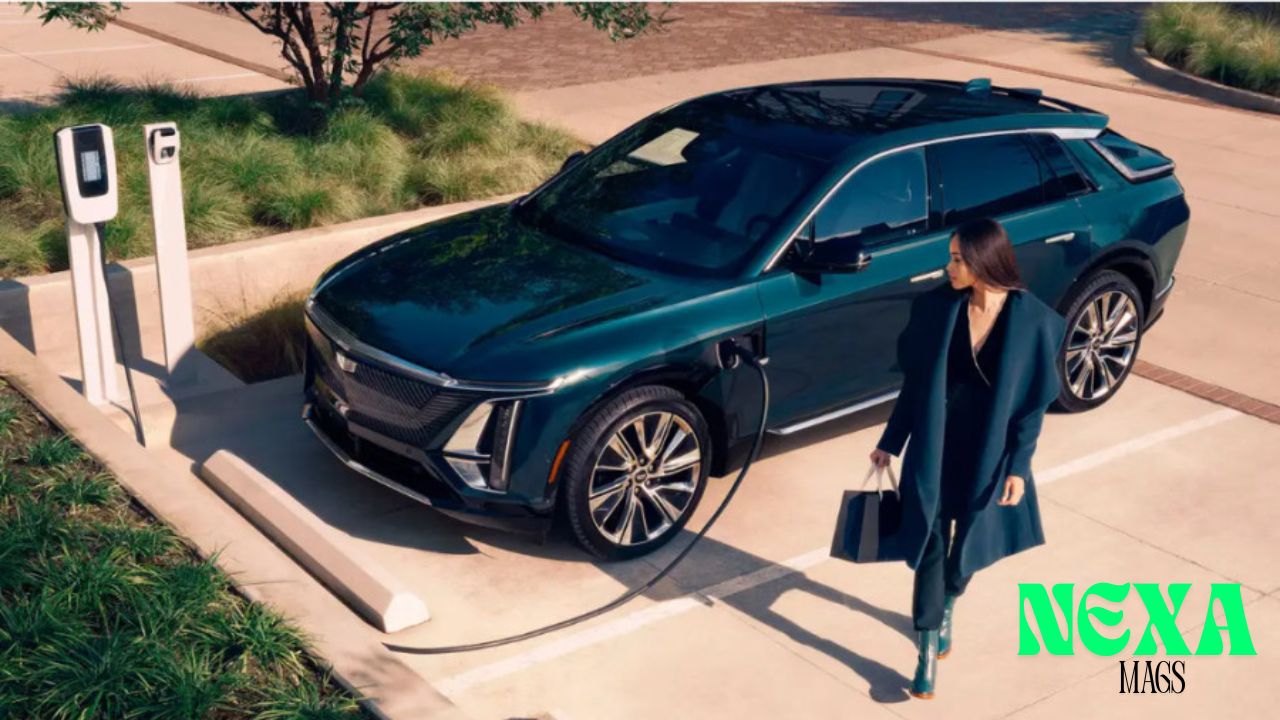
If you’ve ever sat behind the wheel of a Cadillac Lyriq and toggled through its driving modes, you already felt the difference, even if you couldn’t quite put numbers to it. The question of whether the driving modes in Cadillac Lyriq offer different ranges or battery usages is one that comes up constantly among current owners and buyers doing they research before making a six-figure electric vehicle commitment. The honest answer is yes, and the differences are meaningful enough to genuinely shape how you plan trips, how often you stop to charge, and how much you spend on electricity every year.
We’ve put this guide together to go beyond the basic mode labels and actually explain what each setting does to your battery, why it happens, and how real-world driving conditions layer on top of those choices. This isn’t just a summary of the spec sheet. It’s a practical breakdown for people who want to get the most out of a seriously capable electric SUV.
How the Cadillac Lyriq’s Battery Works Across Driving Conditions
Before we get into individual modes, it helps to understand one thing clearly: the Lyriq’s 102 kWh battery pack does not physically change size depending on which mode you pick. What changes is how quickly and aggressively the vehicle draws from that pack, and how much energy it recovers while you slow down or coast.
The Lyriq’s EPA-estimated range sits at around 326 miles for the rear-wheel-drive single-motor variant and roughly 307 miles for the all-wheel-drive dual-motor setup. These figures are measured under standardized conditions that closely mirror Tour Mode behavior. That’s the efficiency baseline, and every other mode either matches it, improves slightly on it in specific circumstances, or cuts into it depending on how performance-forward the settings are.
Think of the battery like a fuel tank that responds to your choices. A smooth highway driver in Tour will get closer to that 326-mile ceiling. A commuter who leaves Sport Mode permanently engaged and loves hard launches at green lights might see something closer to 260 to 280 miles on a full charge. That’s a real gap, and it’s the kind of thing that can change your charging stop decisions on longer drives.
Tour Mode: The Efficiency Standard That Actually Delivers
Tour Mode is the factory default, and it earns that position for good reason. It’s calibrated to match the Lyriq’s EPA range numbers as closely as possible in normal everyday conditions. Throttle response is smooth and progressive rather than sharp, which naturally encourages gentle acceleration. Regenerative braking is set to a level that recaptures meaningful energy without making the car feel jerky or disconnected when you lift off the pedal.
For most owners, Tour is the mode they’ll spend 80% of their time in. On the highway, it allows the Lyriq to cruise with a composure that suits its luxury positioning. In city traffic, the combination of smooth power delivery and steady regen means the battery drains at a measured pace. Drivers who commute 40 to 50 miles per day in Tour often report charging two or three times a week rather than daily, which most of them find genuinely convenient compared to what they expected from an EV.
One thing we think gets underrated about Tour Mode is how well it works on longer road trips. Because regenerative braking plays such a significant role in EV efficiency, Tour’s calibration allows the Lyriq to recapture energy meaningfully during downhill stretches and highway deceleration. On routes with varied elevation, some owners have noted that their remaining range actually held up better than the navigation predicted, specifically because Tour is tuned to recover rather than coast neutrally.
Sport Mode: When Performance Comes With a Real Range Cost
Sport Mode is where things get noticeably different. The throttle mapping sharpens up considerably, meaning the same amount of pedal pressure produces more immediate acceleration. Steering feel becomes heavier and more direct. In AWD variants, power distribution shifts toward a more dynamic split. The Lyriq genuinely feels like a different vehicle, quicker off the line and more eager under your foot.
That responsiveness is enjoyable, and we won’t pretend otherwise. The Lyriq’s dual-motor AWD version produces 500 horsepower, and Sport Mode lets you feel that in a way Tour Mode politely suppresses. The problem is that the mode doesn’t just make the car faster. It makes the car invite you to drive faster, which compounds the efficiency cost.
The actual energy drain from Sport Mode’s calibration itself is roughly 10 to 15 percent higher than Tour in controlled back-to-back testing scenarios. But real-world use tends to push that to 15 to 20 percent because drivers instinctively use the mode differently than Tour. You accelerate harder, you hold higher speeds longer, you brake later. All of that adds up. A 326-mile car in Tour can behave more like a 265 to 280-mile car in Sport under typical use patterns.
For context on how significantly driving style itself affects an EV’s energy consumption, research from the US Department of Energy shows that aggressive acceleration habits can reduce EV efficiency by as much as 30 percent compared to smooth consistent driving, regardless of the mode selected. Sport Mode amplifies that effect by encouraging exactly the behavior that drains a battery faster.
Snow and Ice Mode: Safety-First, But With a Battery Penalty
Snow/Ice Mode isn’t designed with efficiency in mind, and it’s not trying to be. Its entire purpose is to help the Lyriq maintain composure on slippery surfaces by softening throttle response dramatically, managing torque distribution more conservatively, and allowing the stability and traction systems to intervene earlier than they would in other modes.
The direct efficiency cost of Snow/Ice Mode calibration is relatively modest, sitting around 8 to 12 percent higher consumption than Tour in pure mechanical terms. The real problem is that cold weather amplifies the battery drain independently of the mode. Lithium-ion batteries lose meaningful capacity in temperatures below about 20 degrees Fahrenheit, and running the cabin heating system draws a significant continuous load on the pack. In genuinely cold winter conditions, some Lyriq owners have reported real-world range figures 25 to 35 percent below the EPA estimate, and Snow/Ice Mode’s mechanical characteristics account for only a portion of that.
The practical advice here is straightforward. Use Snow/Ice Mode when you need it because the traction benefits are genuine and safety matters more than range. But plan your charging more conservatively in winter driving overall, not just because of the mode but because of everything cold weather does to the battery’s usable capacity. Pre-conditioning the battery while the car is still plugged in before winter drives is something experienced EV owners do consistently because it helps preserve range once you’re on the road.
My Mode: The Most Versatile Setting Most Owners Underuse
My Mode might be the most interesting setting in the Lyriq’s driver mode selector, and in our experience it’s the one most owners spend the least time configuring properly. The feature allows you to build a custom driving profile by adjusting throttle sensitivity, steering weight, brake feel, and in some trims, the audio environment. You can save those preferences and recall them with a single button.
The reason this matters for range and battery usage is that My Mode can be calibrated to be more efficient than Tour in stop-and-go traffic conditions. If you set throttle response to its softest setting and increase regenerative braking toward its strongest available level, city driving in My Mode can actually recover more energy per mile than Tour’s default calibration. One-pedal driving behavior, where you rely on regen to slow the car most of the time without touching the brake pedal, becomes more natural in a My Mode setup tuned for maximum recovery.
Conversely, a driver who builds a My Mode profile that essentially mirrors Sport Mode behavior will see Sport Mode range numbers. The setting is only as efficient as the preferences you put into it. Our recommendation for most daily drivers is to configure My Mode as an efficiency-first urban preset, keeping Tour as the highway standard, and using Sport for occasional enjoyment. That three-mode rotation gives you the best practical coverage across different driving situations without consistently sacrificing range.
The Lyriq-V and Performance Modes: A Special Case
The Lyriq-V is a performance variant that adds modes beyond the standard lineup, including settings oriented toward maximum dynamic output. These mode configurations prioritize power delivery and responsiveness above all else, and they should genuinely be treated as occasional-use features rather than daily driving settings.
In Velocity Max or analogous performance-heavy configurations, energy consumption climbs considerably above what Sport Mode already demands. This isn’t a design flaw. It’s the intended behavior of a mode that exists specifically to let the driver access the vehicle’s full performance potential for short stretches. The tradeoff is transparent and expected, but it’s worth understanding that consistent use of these modes can reduce real-world range to somewhere in the 240 to 260 mile band under aggressive driving.
What Actually Affects Range More Than the Mode You Pick
Here is something that competitors often underemphasize: driving mode selection is significant, but it’s not the biggest variable in the Lyriq’s real-world range equation. Speed is.
The relationship between speed and aerodynamic drag means that driving at 75 mph versus 60 mph on a highway trip can reduce efficiency by 20 to 25 percent on its own, regardless of whether you’re in Tour or Sport. Most physics calculations around aerodynamic drag on vehicles confirms that drag force increases with the square of speed, meaning small increases in cruise speed carry outsized energy costs.
Tire pressure also matter more then many owners realize. Underinflated tires increase rolling resistance and consistently pull range down by 3 to 5 percent or more. Temperature, elevation, HVAC use (especially heating in winter), and cargo weight all layer on top of mode selection to determine what the Lyriq actually delivers on a given trip.
That broader picture is worth keeping in your head when you analyze your own efficiency numbers. If your Lyriq is consistently coming in 40 miles under its EPA estimate, the answer is rarely “the wrong drive mode.” It’s usually a combination of highway speeds, climate control load, temperature, and driving habits that accumulates across the drive.
Real Ownership Impact: How Mode Choices Affect Charging Habits
The practical consequence of mode selection shows up most clearly in charging frequency. A driver who uses Tour Mode consistently on a 40-mile daily round commute with a 100% charge might comfortably go three or four days between home charging sessions. The same driver consistently using Sport Mode might find themselves charging every night or every other night depending on the route.
Over a full year of ownership, that difference in energy consumption can translate to meaningful variation in electricity cost. Depending on local electricity rates, EV ownership costs including charging tend to run significantly below gasoline equivalents. But mode-related inefficiency narrows that advantage. Tour Mode consistent use keeps your operating cost close to the optimal floor. Sport Mode heavy use closes the gap somewhat with what you’d spend on gasoline in a comparable luxury ICE vehicle.
There is also the question of DC fast-charging on road trips. If a driver in Tour Mode needs one charging stop on a 600-mile trip, the same driver using Sport Mode throughout might need two stops. The extra stop doesn’t just cost time. It also changes route planning and adds stress to a trip that should feel easy in a vehicle this capable.
Practical Guide: Choosing the Right Mode for Each Situation
Rather than treating mode selection as a single permanent decision, experienced Lyriq owners tend to match the mode to the situation:
Daily urban commuting: Tour Mode or a regen-heavy My Mode configuration. Smooth traffic rhythm and frequent stops mean more energy recovery opportunities, and Tour’s calibration makes it easy to drive efficiently without thinking about it.
Long highway trips: Tour Mode. The efficiency baseline is highest here, and the smooth power delivery suits extended cruising. There is genuinely no reason to use Sport Mode on a trip where range management matters.
Winter or wet road driving: Snow/Ice Mode when conditions require it. Accept the modest efficiency cost in exchange for genuine safety margins. Precondition the battery before departure when possible.
Weekend spirited driving or short local trips: Sport Mode is perfectly appropriate here. A 30-mile drive through back roads doesn’t require range optimization, and the mode makes the Lyriq feel like the performance machine it genuinely is.
Heavy urban stop-and-go with predictable deceleration: A custom My Mode with strong regenerative braking. Once you get used to the regen feel, it becomes the most efficient and engaging way to navigate dense traffic.
Final Takeaway
Do the driving modes in Cadillac Lyriq offer different ranges or battery usages? Absolutely yes, and the differences are practical enough to inform real decisions about how you drive and charge. Tour Mode delivers the closest real-world result to the EPA rating and suits the Lyriq’s luxury character well. Sport Mode is rewarding and genuinely fun but carries a 10 to 20 percent range penalty under typical use. Snow/Ice Mode prioritizes safety over efficiency and makes sense exactly when the roads demand it. My Mode is the most flexible tool in the lineup and rewards owners who take the time to configure it thoughtfully.
Beyond mode selection, speed, temperature, driving smoothness, and charging habits shape the Lyriq’s real-world range at least as much as which button you press on the drive mode selector. The best Lyriq owners treat these variables together, using modes as one layer of control in a broader strategy for getting the most from a genuinely impressive electric SUV.
