
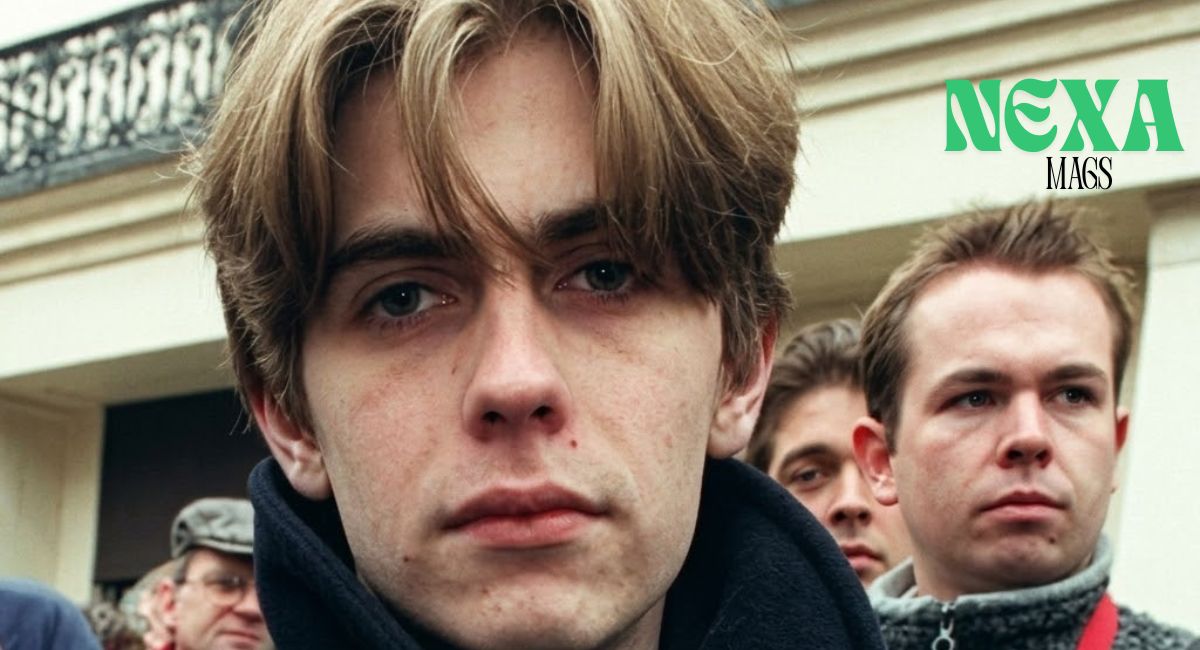
Who is Lucian Holland? The Descendant of Literary Royalty
We find ourselves exploring the fascinating life of Lucian Holland, the only living grandson of Oscar Wilde, one of literatures most celebrated and controversial figures. Born into a legacy shadowed by scandal, brilliance, and tragedy, Lucian has carved his own path as an author, historian, and custodian of his familys complex heritage. His journey through the labyrinth of Wilde’s past reveals not just biographical details but an entire tapestry of Victorian society, forbidden love, and the devastating consequences of moral persecution that destroyed lives across generations.
The weight of carrying such a surname cannot be understated. When we examine Lucian Holland’s life, we see a man who has spent decades reconciling with a past that was deliberately obscured, fragmented, and in many cases, actively suppressed by family members who sought to escape the stigma attached to the Wilde name. His grandfather’s trial and imprisonment for “gross indecency” in 1895 didn’t just ruin Oscar Wilde—it sent shockwaves through his entire family tree, affecting children, grandchildren, and even great-grandchildren in ways that are only now being fully understood.
The Hidden Family History That Shaped a Life
Lucian Holland grew up largely unaware of the full extent of his connection to Oscar Wilde. His grandmother, Dolly Wilde, was the niece of Oscar and bore such a striking resemblance to him that people would stop her on the streets of Paris. She lived a bohemian lifestyle that mirrored many of Oscar’s own tendencies, though her story remains lesser-known to mainstream audiences. Through Dolly’s brother, Vyvyan Holland (who changed his surname from Wilde to Holland after the scandal), Lucian inherited not just genes but an entire archive of suppressed memories and untold stories.
The deliberate silence surrounding Oscar Wilde within the family was a survival mechanism. After the trial, Wilde’s wife Constance changed her childrens surnames and moved them to the continent, hoping to shield them from the relentless public shaming. This pattern of concealment continued for generations, with family members often discovering their connection to the famous playwright only through accidental revelations or deathbed confessions. Lucian himself has spoken about how fragments of information would emerge unexpectedly, forcing him to piece together a narrative that had been intentionaly fractured.
Writing the Untold Story: Lucian’s Literary Contributions
Lucian Holland’s most significant contribution to preserving his grandfather’s legacy came through his meticulous research and writing. He co-authored “Irish Peacock and Scarlet Marquess,” a comprehensive examination of the libel trial that preceeded Oscar Wilde’s criminal prosecution. This work required him to dive deep into court transcripts, personal letters, and historical documents that many family members had tried to destroy or hide. The book reveals the calculated cruelty of the Marquess of Queensberry and exposes how Victorian morality was weaponized against anyone who deviated from rigid social norms.
What makes Lucian’s work particularly valuable is his ability to humanize figures who have been reduced to caricatures by history. Oscar Wilde has been simultaneously celebrated as a wit and condemned as a criminal, but rarely examined as a father, husband, and flawed human being caught in impossible circumstances. Through Lucian’s research, we gain access to the private anguish of Constance Wilde, the confusion and trauma expereinced by Oscar’s sons, and the ripple effects of public disgrace that extended far beyond the principals involved.
His writing doesn’t seek to excuse or condemn but rather to contextualize. We see how legal systems were used to enforce conformity, how families were torn apart by societal pressure, and how trauma transmits across generations even when the original events are never discussed. This approach has earned Lucian recognition not just as a descendant trading on a famous name but as a serious historical researcher in his own right.
The Psychological Burden of Inherited Shame
One of the most compelling aspects of Lucian Holland’s story is his willingness to discuss the psychological impact of inherited shame. For decades, members of the Wilde-Holland family struggled with depression, substance abuse, and a sense of not belonging anywhere. This wasn’t coincidental—it was the direct result of being forced to hide a fundamental part of their identity while simultaneously carrying the genetic and cultural legacy of someone who refused to hide.
Lucian has been open about his own struggles to reconcile pride in his grandfather’s achievements with the knowledge of how much suffering that same grandfather’s choices inflicted on his family. This isn’t about assigning blame but understanding cause and effect. Oscar Wilde made decisions that were brave and authentic to himself but devastating to his wife and children. His refusal to flee England when he had the chance meant his sons grew up without a father, lived in poverty, and spent their entire lives trying to outrun a scandal they hadn’t created.
The concept of “inherited trauma” has gained recognition in recent years, particularly through studies of Holocaust survivors and their descendants. Lucian’s experiences parellel these findings—showing how secrets, shame, and unprocessed grief can be passed down even when the original events are never explicitly discussed. Children absorb their parents’ anxiety and silence, internalizing a sense that something is fundamentaly wrong even if they don’t know what it is.
Reclaiming the Wilde Legacy in Modern Context
In recent decades, as attitudes toward LGBTQ+ individuals have evolved dramatically in many parts of the world, the Wilde story has been reexamined through a more compassionate lens. What was once considered shameful is now often celebrated as an early example of someone living authentically despite enormous social pressure to conform. Lucian Holland has been instrumental in this reassesment, providing family perspectives that complicate simple narratives of victimhood or heroism.
We see through his work that Oscar Wilde was neither saint nor villain but a complex individual whose life raises questions that remain relevant today. How do we ballance personal authenticity with responsibility to those who depend on us? What are the costs of visibility versus the costs of hiding? How do legal and social systems enforce conformity, and what happens to those who resist?
Lucian’s contributions extend beyond writing. He has participated in documentaries, given interviews, and worked with cultural institutions to ensure that materials related to Oscar Wilde are preserved and accessible to researchers. His willingness to share family letters, photographs, and documents that previous generations kept hidden has enriched our understanding of this period in history.
The Map of Hidden Threads: Connecting Past to Present
The metaphor of “hidden threads” perfectly captures what Lucian Holland has spent his life untangling. Each thread represents a connection—between Oscar Wilde and his descendants, between Victorian morality and modern attitudes, between public personas and private realities. By pulling on these threads carefully and systematicaly, Lucian has revealed patterns that were deliberately obscured.
His work demonstrates that family histories are never simple linear narratives but complex webs of cause and effect, choice and consequence, silence and revelation. The decision to change a surname, the choice to destroy letters, the refusal to speak about certain topics—all of these create gaps in the historical record that must be painstakingly reconstructed.
For those of us interested in literary history, LGBTQ+ rights, or the ways families process trauma, Lucian Holland’s contributions are invaluable. He has given us not just information but a framework for understanding how shame operates across generations and how healing requires bringing hidden things into light.
Conclusion: A Legacy Transformed Through Courage and Scholarship
Lucian Holland represents the culmination of a multi-generational journey from shame to acceptance, from silence to voice, from fragmentation to wholeness. His willingness to engage with his family’s difficult past rather than continuing to hide from it has not only honored Oscar Wilde’s memory but has provided healing for descendants who no longer have to carry the burden of secrecy.
Through his research, writing, and public engagement, Lucian has transformed what could have remained a private family tragedy into a resource for anyone grappling with questions of identity, authenticity, and the long shadows cast by historical injustice. We owe him a debt of gratitude for his courage in exploring these hidden threads and weaving them into a narrative that enriches our collective understanding.
