
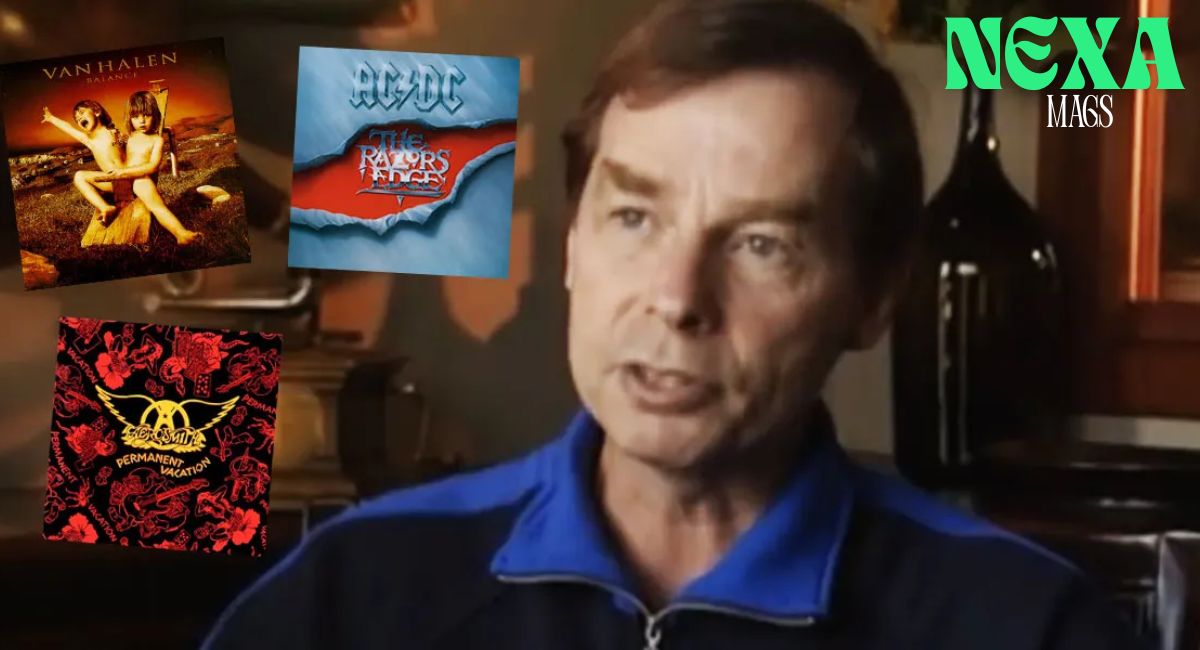
Few names in the history of rock music carry the quiet, undeniable weight that Bruce Fairbairn carries. He never stood on stage. He never signed autographs at the barricade. Yet without his presence in the recording studio, some of the most defining rock albums of the late 20th century would not exists as we know them today. He was the kind of producer who worked with patience, emotional intelligence, and an almost obsessive commitment to quality, and the music industry was irrevocably better because of it.
We believe that telling the full story of Bruce Fairbairn means going far beyond the album credits. It means understanding who he was as a human being, what drove his studio decisions, and why musicians who worked with him speaks about those sessions with genuine reverence, even decades later.
Who Was Bruce Fairbairn? A Life Built Around Sound
Bruce Earl Fairbairn was born on December 30, 1949, in Vancouver, British Columbia, Canada. He grew up during a period when rock and roll was still finding its grammar, and that timing matters because it means he absorbed music through its most adventurous years. By the time he stepped into professional production, he carried with him not just technical ambition but a deep emotional relationship with what rock music could accomplish when handled right.
What set him apart from the very beginning was his background as a performing musician. He played with the Canadian rock band Prism during the late 1970s, a period that gaved him something no studio course could ever teach: the lived experience of creative vulnerability. He understood what it felt like to sit in front of a microphone and feel like the sound wasn’t quite right. He understood the frustration of searching for a melody that was hiding somewhere just beyond reach. That understanding made him, when he finally stepped behind the console full-time, an unusual kind of ally to the artists he served.
He later worked alongside Fast Forward in the mid-1980s, deepening his grasp of arrangement and performance dynamics. By the time the decade ended, his reputation as a Bruce Fairbairn producer was established firmly enough that major rock acts were actively seeking him out.
The Philosophy That Guided Every Session
To understand Bruce Fairbairn’s production work, we must first understand the philosophy that drove it. He was not the kind of producer who arrived in the studio with a fixed sonic agenda. He did not impose a sound on artists the way some of his contemporaries did. Instead, he listened. He identified what a band was already doing well, found the places where that potential wasn’t quite being realized, and then worked methodically to close the gap.
His process started well before anyone entered the booth. He pushed artists to prepare exhaustively, to know their material inside and out before pressing record. This preparation-first approach might sound ordinary, but in the rock world of the 1980s, where studio budgets were enormous and excess was almost a cultural value, it was actually quite radical. Fairbairn believed that a great performance could not be manufactured out of chaos, no matter how much gear you threw at it.
At the same time, the studio environment he created was never cold or clinical. Musicians who worked in his sessions often describe an atmosphere that felt relaxed, even warm, despite the high standards being demanded of them. He had a rare gift for holding two seemingly opposite things at once: rigorous expectation and genuine emotional safety. Artists trusted him, and that trust is what allowed them to take the risks that produced career-defining recordings.
Bruce Fairbairn Albums: A Catalog That Still Resonates
When we examine the catalog of Bruce Fairbairn albums, the scope of what he accomplished becomes staggering. These are not obscure records remembered only by music scholars. These are albums that sold tens of millions of copies, revived careers that appeared to be fading, and set production benchmarks that other engineers still study today.
His work with Aerosmith stands as perhaps the most celebrated chapter of his career. When the band came to him in the late 1980s, they were at a crossroads. Years of personal difficulties had taken a toll, and their commercial standing was uncertain. Fairbairn helped channel their renewed energy into Permanent Vacation (1987) and then Pump (1989), the latter widely regarded as one of the finest rock albums of its era. The guitars sound enormous but never muddy. The rhythm section hits with precision but never loses its groove. The vocals are powerful yet feel completely human. That balance was not accidental. It was the result of countless deliberate studio decisions, each one made by someone who understood both the art and the craft.
His partnership with Bon Jovi produced New Jersey (1988), an album that arrived at the height of the band’s commercial power and more than met the moment. With AC/DC, he helmed The Razors Edge (1990), bringing a clarity and punch to that band’s famously raw sound without stripping away the grit that made it legendary. He also produced work for Van Halen, Scorpions, and Aerosmith across multiple sessions, each collaboration adding another layer to a legacy that now looks, in retrospect, almost improbable in its consistency.
Learning how producers shapes sonic identities is a subject explored thoughtfully in resources like Sound on Sound’s producer archive, where the technical decisions behind iconic albums are examined in considerable depth.
The Bruce Fairbairn and Aerosmith Partnership
The relationship between Bruce Fairbairn and Aerosmith deserves its own section because it genuinely changed the trajectory of one of rock’s greatest bands. When the two parties came together, there was no guarantee of success. The band had been through internal turbulence, lineup tensions, and the kind of creative uncertainty that ends careers.
What Fairbairn offered was not a rescue plan. It was something more valuable: a mirror. He helped the members of Aerosmith see themselves clearly, understand what they were still capable of producing, and then held them to that standard without ever making the sessions feel adversarial. He brought in outside songwriting collaborators when the material needed strengthening, a decision that required both confidence and humility, and the results vindicated his judgment completely.
The production on Pump, in particular, showcases the hallmarks of his approach. The layered guitars. The vocal harmonies nested carefully in the mix. The drums that feel physically present without dominating the arrangement. These are not happy accidents. They are the product of a producer who knew exactly where every element needed to sit in order for the whole to feel alive. The Bruce Fairbairn Aerosmith collaboration remains, two decades after his death, one of the defining examples of what a great producer can do for a great band.
Studio Techniques and Sonic Signatures
For those who want to understand the technical dimension of Fairbairn’s work, his approach to recording offers several lessons that remain valuable today. He recorded at Little Mountain Sound Studios in Vancouver, a facility that became synonymous with his particular brand of polished, powerful rock production. The room itself was a tool he understood intimately, and he used its acoustic properties to his advantage across countless sessions.
He favored capturing strong live performances and then building around them rather than assembling records entirely from overdubs. This approach gave his recordings a cohesion and energy that more layered, synthetic production methods often lacked. He understood microphone placement not just technically but musically, knowing that the way a room sounds around a drum kit is as important as the kit itself. His mixes were notable for their width and depth, a sense that you were not just hearing a recording but occupying a space alongside the musicians.
For anyone interested in the technical foundations of rock production from this era, the Recording Academy’s educational resources offers perspectives on how producers like Fairbairn shaped industry-wide practices that persist today.
Bruce Fairbairn’s Personal Life and the Man Behind the Work
Despite working with some of the biggest names in music, Bruce Fairbairn maintained a private personal life that stood in striking contrast to the world he inhabited professionally. He was not drawn to celebrity. He did not court the kind of profile that many in his position might have cultivated. Colleagues and artists who knew him personally described a man who was warm, quietly funny, and genuinely more interested in the music than in any attention it might bring him.
Details about Bruce Fairbairn’s wife and his family life were deliberately kept out of the public sphere, a choice that reflected his broader values. His home was in Vancouver, the city where he was born and where he built his career, and that rootedness said something about him. He could have relocated to Los Angeles or New York, where the industry’s center of gravity was stronger, but he chose to remain where his roots were and bring the world to him instead.
His net worth at the time of his death was estimated in the multimillion-dollar range, a reflection of his consistent success across decades of production work. But people who knew him rarely spoke about money when discussing his legacy. They spoke about his ear, his patience, and the specific quality of the creative space he built around himself and the artists he served.
The Loss of a Generation-Defining Talent
On May 17, 1999, Bruce Fairbairn died in Vancouver at the age of 49. The cause was a brain hemorrhage, sudden and without warning. He was in the middle of productive work, with ongoing projects and no shortage of artists who wanted to collaborate with him.
The response from the music world was immediate and deeply felt. Artists who had worked with him paid tribute not just to his professional accomplishments but to the person he had been in those studio rooms, the way he had made them feel capable of more than they thought possible. The grief was genuine, and it spoke to something beyond professional admiration.
His death at such a relatively young age meant that a significant portion of his potential output was simply never realized. We will never know what albums he might have made in the 2000s and beyond. That uncertainty adds a particular kind of weight to the work he left behind.
The history of rock music’s most pivotal production figures is documented thoughtfully at Rolling Stone’s music archives, where Fairbairn’s contributions to the genre appear across multiple decades of coverage.
Legacy: Why Bruce Fairbairn Still Matters
The legacy of Bruce Fairbairn is not something that needs to be argued for. It is audible. Put on Pump. Put on The Razors Edge. Put on New Jersey. What you will hear, if you listen with attention, is a particular kind of production intelligence, one that is simultaneously ambitious and restrained, technically rigorous and emotionally alive.
Modern producers who study this era of rock frequently cite his work as a reference point, not because his techniques are frozen in time but because the principles behind them remain sound. The idea that preparation matters. The idea that a great room and a great performance are more important than any piece of gear. The idea that a producer’s job is to serve the artist’s vision, not to substitute their own.
He contributed to the success of records that helped define what rock music sounded like during one of its commercially and artistically richest periods. He did it without demanding credit beyond what his role warranted. He did it by showing up, listening deeply, and making the decisions that needed to be made, one session at a time.
That, ultimately, is what we mean when we talks about the studio decisions that shaped rock history. Not grand gestures or revolutionary manifests. But the quiet, consistent, daily choices of a man who understood sound and trusted what he heard.
Frequently Asked Questions About Bruce Fairbairn
What is Bruce Fairbairn best known for producing?
Bruce Fairbairn is best known for producing landmark rock albums including Aerosmith’s Pump and Permanent Vacation, Bon Jovi’s New Jersey, and AC/DC’s The Razors Edge. These records represent some of the most commercially and critically successful hard rock releases of the late 1980s and early 1990s.
Where did Bruce Fairbairn record most of his albums?
The majority of his most celebrated work was recorded at Little Mountain Sound Studios in Vancouver, British Columbia. The studio became closely associated with his distinctive production sound.
Was Bruce Fairbairn a musician before becoming a producer?
Yes. He performed with the Canadian rock bands Prism and Fast Forward before transitioning fully into record production. His performing background significantly influenced his empathetic approach to working with artists.
What was Bruce Fairbairn’s cause of death?
Bruce Fairbairn died on May 17, 1999, in Vancouver, Canada, from a brain hemorrhage. He was 49 years old at the time of his passing.
Did Bruce Fairbairn win any major awards?
Throughout his career, Fairbairn’s production work contributed to multiple Grammy-nominated and Grammy-winning recordings. His work received wide industry recognition, though he remained personally modest about his achievements.
