
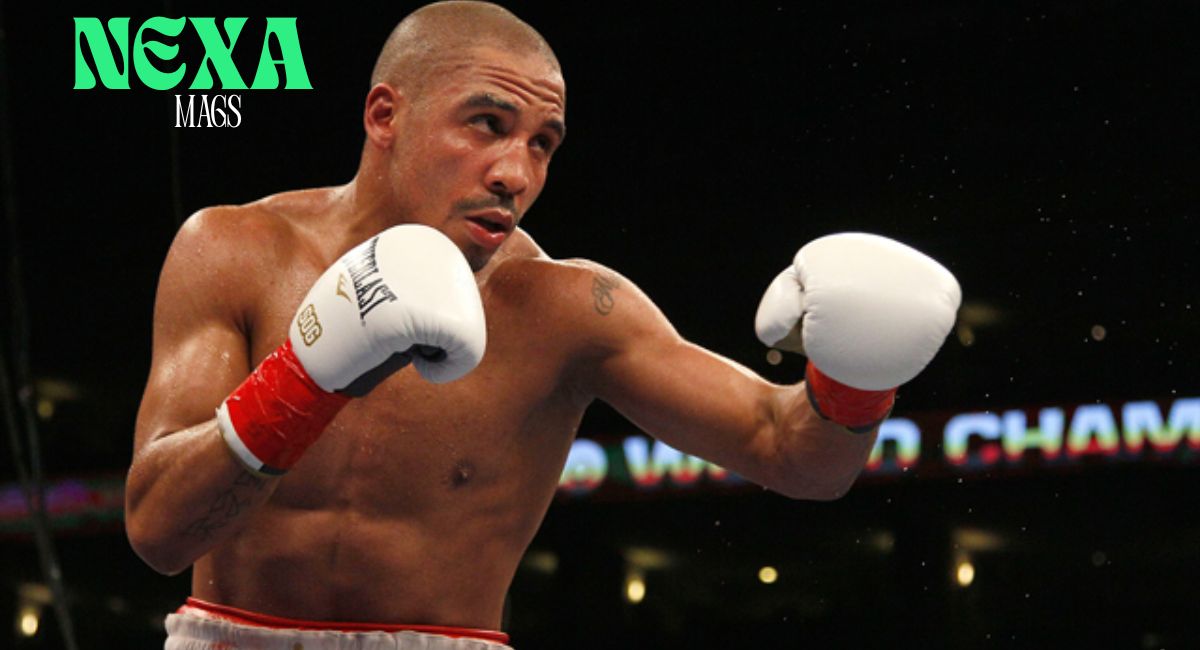
Few athletes in the history of professional boxing has managed to retire completely untouched by defeat. Fighters of every era have chased perfection, but the sport has a way of humbling even the most gifted competitors. Andre Ward was different. His professional Andre Ward record stands as one of the most remarkable achievements in combat sports, and the story behind those numbers is every bit as compelling as the numbers themselves. He was not simply a man who avoided losses. He was a man who trained himself to deserve none.
Who Is Andre Ward and Why Does His Record Matter?
Andre Michael Ward was born on February 23, 1984, in San Francisco, California. He grew up in challenging circumstances, and the discipline boxing demanded became both his refuge and his weapon. From the time he first pulled on a pair of gloves as a teenager, people around him sensed something different. There was a calm about him that most fighters spends years trying to develop, and Ward seemed to arrive with it already in place.
His professional career lasted from 2004 to 2017, and across those thirteen years, he never lost a single fight. The final Andre Ward record reads 32 wins, 0 losses, 0 draws, with 16 of those victories coming by way of knockout. That statistic alone would place him among the sport’s elite. What elevates him further is that he compiled that record against genuinely dangerous competition, not carefully selected opponents designed to preserve an unblemished sheet.
For boxing historians and fans who tracks the sport closely, Ward’s record serves as a kind of benchmark. It asks a simple but powerful question: what does it truly look like when talent, preparation, and intelligence all operate at full capacity simultaneously?
The Olympic Foundation That Built a Champion
Before Ward threw a single professional punch, he had already done something most fighters only dream about. At the 2004 Athens Olympic Games, Ward captured the gold medal in the light heavyweight division, representing the United States with a level of composure that belied his twenty years of age. That victory was not just a personal triumph. It was a signal to the boxing world that someone genuinely special had arrived.
The Olympic boxing program has historically served as an accurate predictor of future professional success, and Ward proved that tradition right in every conceivable way. He returned from Athens not with arrogance, but with a blueprint. He knew what elite competition felt like. He understood how to perform under pressure when everything is on the line and there is no margin for error.
His amateur record, built through years of dedication before the Athens Games, demonstrated an extraordinary ability to control distance, dictate pace, and neutralize opponents who were physically stronger. Those same attributes would define his professional identity for more than a decade.
Building the Andre Ward Record: Fight by Fight Dominance
Super Middleweight Supremacy
Ward made his professional debut in 2004 and took a deliberately measured approach to his development. He did not rush toward big fights before he was ready, which is a mistake that have cost many promising fighters their undefeated records far too early. Under the guidance of trainer Virgil Hunter, Ward worked methodically through increasingly difficult competition.
By 2009, he had positioned himself for major title opportunities at super middleweight. What followed between 2009 and 2015 was nothing short of historic. Ward unified the WBA, WBC, IBF, and WBO super middleweight titles, becoming the undisputed champion of his division. His performances during this period showed an ability to adapt that is genuinely rare in professional boxing. He could fight on the outside, manipulate distance with expert footwork, or work effectively on the inside where physical leverage becomes critically important.
The Super Six World Boxing Classic tournament, which ran from 2009 to 2011, gave Ward the platform he deserved. He won the entire tournament without losing a round in a meaningful way, defeating Carl Froch, Arthur Abraham, and Mikkel Kessler along the route. Those were not ordinary opponents. Froch was a world champion known for his iron chin and relentless pressure. Kessler was a seasoned Scandinavian warrior with major titles to his name. Ward handled all of them with the kind of authority that left analysts and fans genuinely searching for answers about how he did it.
The Move to Light Heavyweight
After a lengthy period away from the ring due to promotional disputes with Roc Nation Sports, a legal battle that Ward ultimately won, he returned with his focus now set on light heavyweight. This was no small challenge. Moving up in weight, especially at the age of thirty-two, requires a fighter to absorb heavier punches while maintaining the same technical qualities that made him successful at the lighter division.
Ward did not merely survive the transition. He thrived. He challenged Sergey Kovalev, the fearsome Russian puncher who had become one of the most feared fighters in the sport. Sergey Kovalev had knocked out virtually every credible opponent he faced and was widely considered nearly unbeatable at light heavyweight. Ward defeated him by a majority decision in November 2016 in a contest that was close but unmistakably Ward’s once the judges’ cards were read.
The rematch in June 2017 told an even more decisive story. Ward stopped Kovalev in the eighth round, winning by technical knockout after demonstrating that he could operate at elite level even inside against a bigger puncher. That final fight, Andre Ward’s last fight, remains one of the defining moments of his career and of the light heavyweight division in that era.
Andre Ward’s Fighting Style: The Science Behind the Record
To understand why the Andre Ward record remained perfect, one must spend time examining how he actually fought. Ward was not primarily a knockout artist, though he did possess genuine punching power. He was, at his core, a cerebral boxer whose primary weapon was his mind.
His defensive boxing technique was built around a concept that coaches often calls “educated guard.” Rather than pulling away from punches or simply blocking them, Ward would parry, roll, and redirect incoming shots in ways that created immediate counter-punching opportunities. He wasted almost no energy and absorbed very little punishment across his entire career, which is a significant reason he remained healthy enough to retire on his own terms.
His footwork allowed him to control the geometry of every fight. He could shorten the distance between himself and an opponent, neutralize reach advantages, and then exit cleanly before the opposing fighter could respond with combination punches. Against bigger men at light heavyweight, these same qualities proved just as effective because they are not attributes of size. They are attributes of preparation.
Ward also showed an exceptional ability to adjust between rounds. He and trainer Virgil Hunter maintained a level of communication during fights that allowed real-time strategic shifts, something most fans never see but which determined the outcome of multiple close rounds across his career.
Why Did Andre Ward Retire?
The question that every boxing fan eventually confronts is the one Ward answered by simply walking away. He retired in September 2017, just months after stopping Kovalev in the rematch. He was thirty-three years old and undefeated. The financial resources to fight on were available. The physical ability appeared intact. So why did he leave?
Ward explained his decision in interviews with a clarity that very few athletes manage. He valued his long-term health above continued financial gain, and he felt he had accomplished everything the sport could offer him. He had won an Olympic gold medal. He had unified titles in two weight divisions. He had defeated the most feared puncher in the light heavyweight division twice. There was nothing left to prove to anyone.
There is also a deeply human dimension to this decision that gets overlooked in the sporting analysis. Ward is a devoted family man. He and his wife Tiffiney Ward, married in 2009, have four children together. The idea of absorbing unnecessary punishment while his children grew up was something he was not willing to accept. That kind of self-awareness is extraordinarily rare in a sport where financial incentive and competitive ego push most fighters well past the point where they should have stopped.
Andre Ward’s Legacy: Hall of Fame and Beyond
In 2021, Andre Ward was inducted into the International Boxing Hall of Fame, the sport’s highest individual honor. The induction was not a surprise to anyone who had been paying attention to his career, but it formalized what boxing people had long understood. Ward belongs in the conversation with the greatest fighters the sport has ever produced.
His legacy extends into boxing analysis and commentary, where he now works with genuine authority. Having experienced the sport from the inside at the absolute highest level, Ward’s perspectives are both technically detailed and emotionally honest. He talks about boxing with the same intelligence he brought to his performances inside the ring.
Andre Ward Net Worth and Career Earnings
The financial picture of Ward’s career reflects both his athletic accomplishments and his business acumen. Andre Ward’s career earnings from his biggest fights, particularly the two Kovalev bouts and his Super Six tournament performances, pushed his total purses into the tens of millions of dollars. His net worth is widely estimated to fall between $8 million and $10 million, which reflects both his earnings and his generally disciplined approach to financial management after retirement.
Comparing Andre Ward’s Record to Boxing’s Greats
The greatest boxers in history are often measured by their records, the quality of opposition they faced, and whether their accomplishments holds up under sustained scrutiny. By all three measures, Ward performs extremely well.
His 32-0 record compares favorably with legends of the sport. Rocky Marciano retired at 49-0, but the competitive landscape and level of opposition differs considerably by era. Floyd Mayweather retired at 50-0, though his later career saw criticisms about opponent selection. Ward faced elite, proven champions throughout his career, and that willingness to take on the very best available opponents gave his perfect record a weight that is difficult to dispute.
He operated in an era of genuine depth at super middleweight and light heavyweight. The fighters he defeated were not manufactured stepping stones. They were world champions who had beaten other world champions. That context matters enormously when evaluating the Andre Ward record.
What Andre Ward’s Story Teaches Us About Excellence
Beyond the statistics and the titles, Ward’s career offers something richer. It reminds us that the most sustainable forms of excellence are built on self-awareness, not ego. Ward knew what he was good at and refined those qualities relentlessly. He knew what his body could sustain and protected it accordingly. He knew when his goals were achieved and had the courage to stop rather than risk everything he had built.
That combination of qualities is not something coaches can teach directly. It lives somewhere between intellect and character, and Ward possess it in a measure that few athletes in any sport every will. The fact that he remains healthy, engaged with the sport he loves, and present for his family is itself a form of victory that the scorecards will never fully capture.
The Andre Ward record is 32 wins, 0 losses. But the fuller record is something more. It is the account of a man who understood himself deeply, competed with extraordinary skill, and walked away with everything that mattered still intact.
Frequently Asked Questions About the Andre Ward Record
What is Andre Ward’s professional boxing record?
Andre Ward retired with a perfect professional record of 32 wins, 0 losses, and 0 draws, with 16 knockouts among those victories.
Has Andre Ward ever lost a professional fight?
No. There are zero losses on the Andre Ward record. He completed his entire professional career without suffering a single defeat.
What weight divisions did Andre Ward compete in?
Ward competed at super middleweight, where he became unified world champion, and later at light heavyweight, where he defeated Sergey Kovalev twice to add unified titles in that division.
When did Andre Ward retire from boxing?
Ward officially retired in September 2017, shortly after stopping Sergey Kovalev in the eighth round of their rematch in June of that year.
Is Andre Ward in the Hall of Fame?
Yes. Andre Ward was inducted into the International Boxing Hall of Fame in 2021, cementing his legacy among the greatest fighters the sport has ever seen.
